A Lower Cost of Living Is the Wrong Reason to Move to Asia
Hundreds of thousands are leaving the West for Asia. The motivations are real. But arriving without cultural understanding is a mistake that costs more than money.
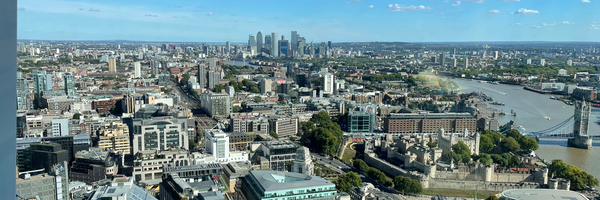
Type "leaving the UK" into YouTube's search bar and watch what happens. The algorithm floods you with testimonials, vlogs, and cost-of-living breakdowns from Bristol to Bangkok, from Manchester to Medellín. Young professionals calculating how far a London salary stretches in Chiang Mai. Families doing the maths on private schooling in Kuala Lumpur versus state schools in Surrey. Retirees discovering that a pension which buys anxiety in Portsmouth buys a genuinely comfortable life in Penang.
The phenomenon is real. The ONS now estimates that 257,000 British nationals left the UK in 2024 — a figure so much higher than previous estimates that the statistics office had to revise its entire methodology to account for it. Net emigration of British nationals ran at negative 114,000. Private wealth trackers put the outflow of millionaires from the UK at roughly 9,500 in the same year, with projections suggesting that figure could rise to 16,500 in 2025 — potentially the largest wealth outflow of any country on earth. Replace Britain with France, Germany, the Netherlands, or Sweden, and the underlying pressures tell a broadly similar story: cost of living, fraying public services, safety concerns, and a growing sense that the social contract which once made these cities worth the cost is no longer reliably delivering on its side of the bargain.
The motivations are not hard to understand. Cost of living. Safety. Climate. The simple, undramatic discovery that the quality of daily life — the food, the commute, the sense of possibility — is often higher in Kuala Lumpur or Osaka or Chiang Mai than in the city these people just left. For many, the move to Asia is the most rational decision they have ever made.
But there is something the YouTube algorithm does not show you. And it is the thing that will determine whether this wave of arrivals becomes a genuine exchange — or leaves a problem behind that takes a generation to repair.
There is an irony at the centre of this migration wave that rarely gets named directly.
A meaningful share of the people leaving Britain — and leaving France, and leaving the Netherlands, and leaving cities across the Western world — will tell you, if you ask them honestly, that part of what pushed them out was a sense that their home had changed faster than it could absorb. That communities had formed which remained parallel rather than integrated. That the social contract of a shared public culture had frayed. The language of this grievance is often politically charged, but beneath the politics is a recognisable human experience: the feeling of becoming a stranger in a familiar place.
What is rarely examined is what happens when those same people arrive somewhere new.
The digital nomad in his Canggu villa, ordering from an English-language app, socialising exclusively within the expat compound, politely uninterested in Balinese culture beyond its aesthetics — he is not doing something different from what frustrated him at home. He is doing the same thing. The extraction without contribution. The presence without participation. The consumption of a place without any real curiosity about the people who built it.
This is not a comfortable observation. But it is an honest one. The problem was never about where people came from. It was always about the posture they arrived with.
It would be convenient to frame this as a Western problem. It is not.
Across Southeast Asia, the pattern repeats regardless of passport colour. Chinese-speaking communities in Kuala Lumpur, Penang, and Singapore have existed for generations — commercially successful, socially cohesive, and in some cases remarkably self-contained. The infrastructure for a Mandarin speaker to arrive in Kuala Lumpur and never meaningfully engage with Malay culture is completely intact. It has been intact for decades. The newer wave of arrivals from mainland China, Hong Kong, and Taiwan often steps straight into that infrastructure and remains there — not out of hostility, but out of the simple human preference for the familiar.
Korean expats across the region carry a different version of the same assumption. The extraordinary global reach of Korean cultural exports — the music, the drama, the food, the aesthetics — has created a form of soft-power confidence that can tip, in individuals, into the belief that being Korean is itself a form of cultural currency. That the love of Hallyu in Bangkok or Jakarta translates into a welcome that requires no further effort to maintain.
Japanese expat communities have historically resolved the tension differently — through a cohesion so thorough it rarely creates friction precisely because it rarely creates contact.
None of these are malicious. All of them are, in their own way, a quiet refusal of the actual exchange that living somewhere demands.
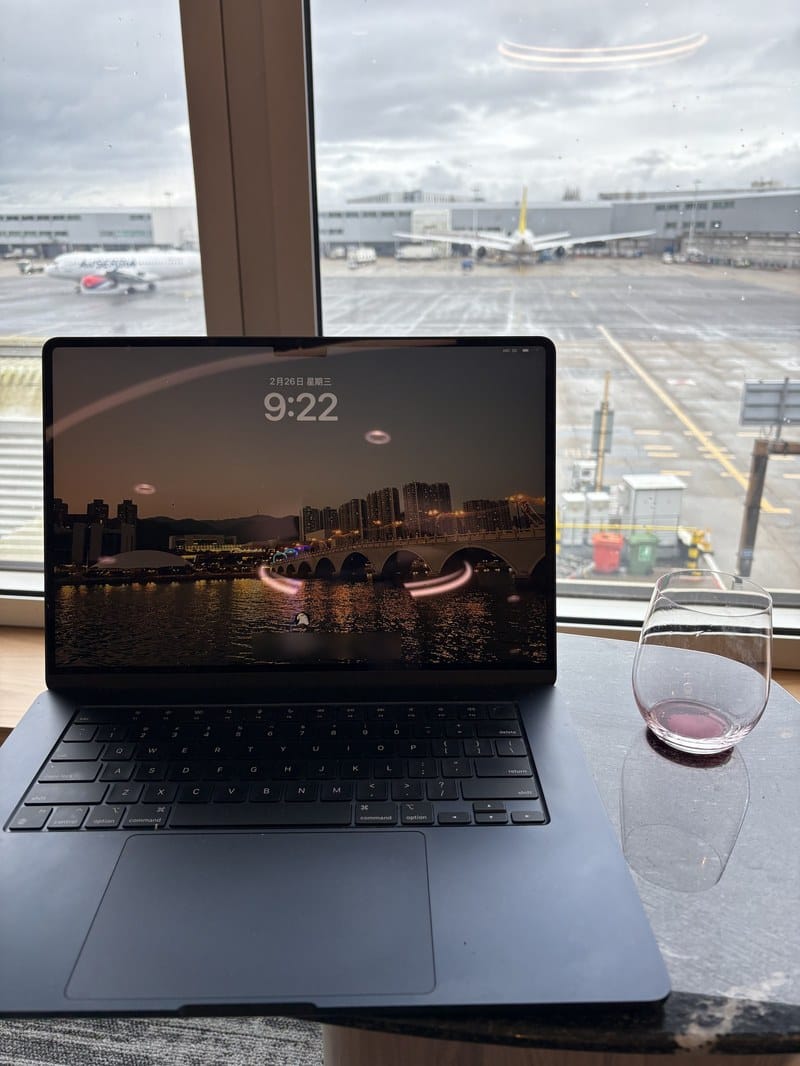
I am not writing this from the outside.
I am a Chinese speaker. When I travel to Malaysia, I could conduct my entire life in Mandarin without meaningful friction. The Chinese community in Kuala Lumpur is substantial, commercially embedded, and socially visible. The infrastructure for a Chinese-speaking visitor to remain entirely within that world — the restaurants, the business networks, the social circles — is completely intact. Nobody would blame me for using it.
But I am taking Malay classes.
Not because it is strategically necessary. Not because I cannot get by without it. But because showing up in someone else's country and defaulting to the language of your own diaspora, rather than making any effort toward the language of the place itself, is a form of disrespect so normalised it has become invisible. It says: your culture is a convenience I will use when it suits me, and a background I will ignore when it does not.
The Malay I am learning is basic. The gesture, however, is not. In every culture I have operated in across more than forty countries, the single most consistent signal of genuine respect — the one that opens doors that credentials and business cards cannot — is the willingness to meet people in their own language, even imperfectly. It costs almost nothing. It changes almost everything.
This is not virtue. It is operating logic.
Which brings us to Japan — because Japan is where the consequences of getting this wrong are already visible, and where the lessons for anyone operating a business in Asia are most clearly written.
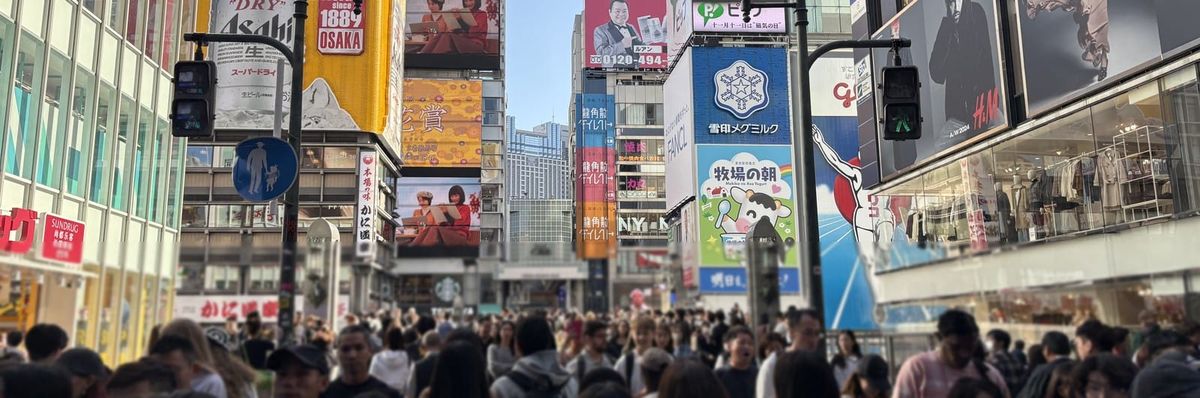
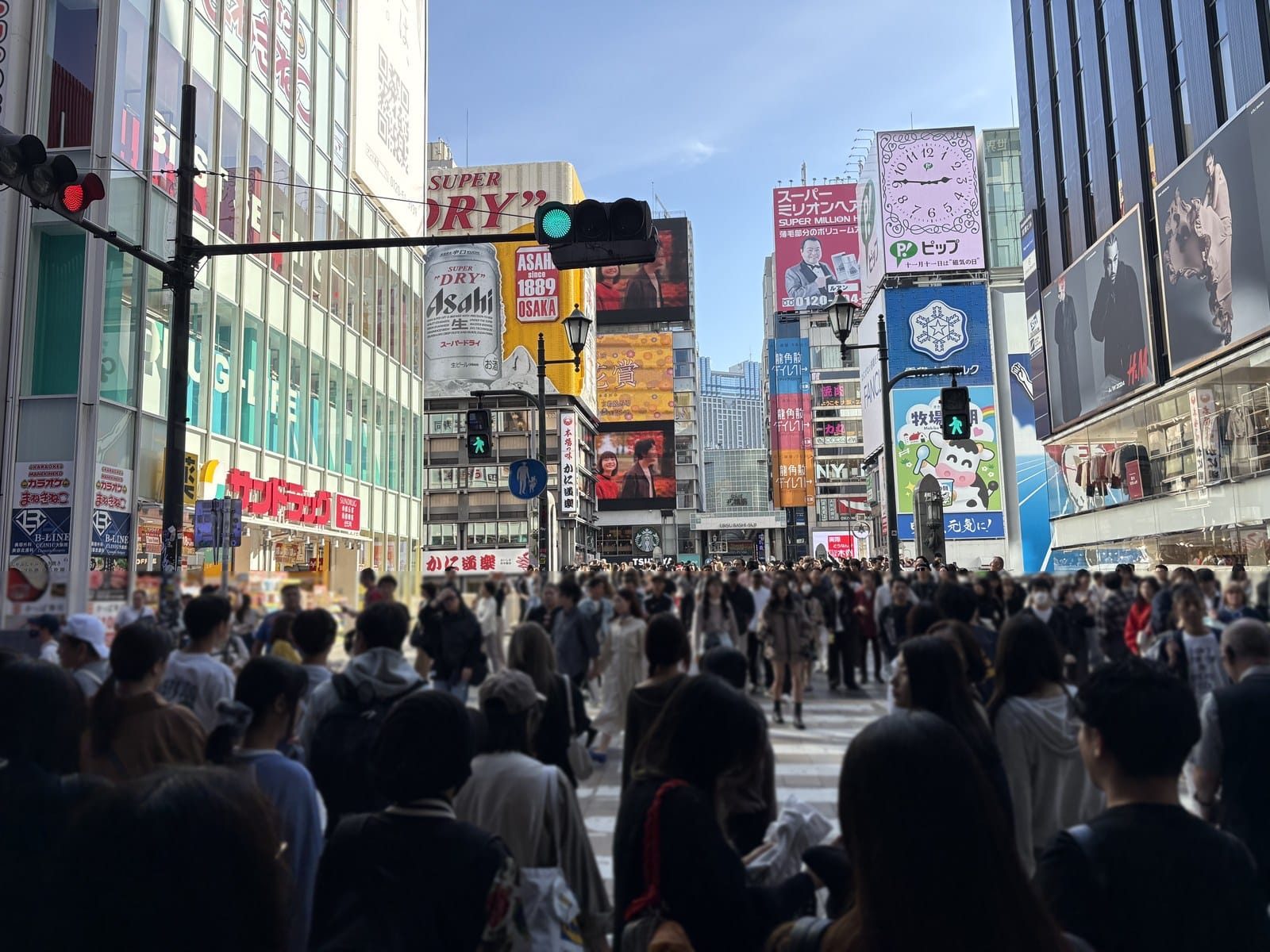
Japan's overtourism problem has been extensively documented. The queues at Fushimi Inari at five in the morning. The residents of Fujikawaguchiko erecting barriers to block tourists photographing Mount Fuji from a convenience store roof. The Kyoto city government charging foreign visitors a night tax and quietly lobbying for tools to restrict access to certain neighbourhoods entirely. These stories have become familiar.
What receives less attention is the secondary effect — the way that high-volume, low-respect behaviour reshapes how Japanese society perceives foreigners as a category. Japan is a high-context culture with an exceptionally refined sensitivity to social conduct. The distinction between an oblivious tourist photographing a private funeral procession and a foreign executive trying to build a twenty-year business relationship in Osaka is obvious to you. It is not always obvious in the cumulative social perception that builds when the volume of the former becomes large enough.
Japanese politeness means this rarely surfaces directly. It surfaces instead in the slight cooling of a meeting that was warm the last time. In the extra layer of formality that appears where ease had begun to develop. In the question, never asked aloud, of whether this particular foreigner understands where he is — or whether he is simply another person passing through, taking photographs and leaving.
For anyone doing serious business in Japan, this ambient shift in the room matters. You did not create it. But you are operating inside it, and pretending it does not exist is its own form of cultural incompetence.
The executives who will navigate this best are not the ones with the most impressive credentials or the most aggressive market entry strategy. They are the ones who have done enough — learned enough, observed enough, genuinely integrated enough — that they are perceived, however partially, as someone who took Japan seriously. Who showed up with curiosity rather than just appetite.
That gap — between the person extracting value and the practitioner building genuine presence — is not a soft distinction. In Japan, it is frequently the difference between a relationship that closes and one that never quite does.
Asia is not running out of room for foreigners. It is running out of patience for a particular kind of foreigner — the one who arrives with a spreadsheet of cost advantages and a complete absence of curiosity about where he has landed.
The move to Asia, whether as a digital nomad, a relocating executive, or an investor restructuring where capital is based, is genuinely worth considering. The quality of life argument is real. The financial logic in many jurisdictions is sound. The opportunity, for those who can read the room, remains extraordinary.
But Asia is not a lifestyle upgrade. It is not a cheaper, sunnier, safer version of the life you were already living. It is not a backdrop. Every country in this region has a history longer than the nation that most of its new arrivals come from, a social architecture more layered than anything a cost-of-living calculator can capture, and a cultural intelligence that will read you — your posture, your effort, your respect or lack of it — long before you have read it.
Moving to Asia properly is not a subtraction. It is not about leaving something behind and replacing it with something more affordable. It is an addition — a new dimension, a genuinely different way of seeing the world, available only to those willing to engage with it on its own terms rather than on theirs.
What this newsletter is built on is a simple conviction: that the most valuable asset you can carry into any Asian market is not capital, not contacts, and not credentials. It is understanding. The willingness to learn the language, even imperfectly. To know something of the history before you sit down at the table. To recognise that you are a guest in a system that was functioning long before you arrived, and that will continue functioning long after you leave.
That is what separates the people who move to Asia and thrive from the people who move to Asia and merely exist there. And it is the only lens through which any of what follows in this newsletter will make sense.
Bowen is an independent business consultant and cross-cultural strategist. He has lived and worked across Hong Kong, Singapore, Kuala Lumpur, Tokyo, London, Lille and Stockholm. This article is for informational and analytical purposes only and does not constitute financial or investment advice. Nothing in this newsletter should be construed as a recommendation to buy, sell, or hold any asset or security.