The End of Omotenashi as a Blank Cheque
Japan's famous hospitality is quietly changing — and visitors are the first to feel it. But the real story is not about declining service standards. It is about what omotenashi always was, and what Japan is now doing to protect it.
Japan's famous hospitality is changing — and visitors are noticing. But the real story is not about declining service standards. It is about what omotenashi always was, why it is under pressure, and what Japan is now doing to protect it.
Something has changed in Japan, and travellers who knew it before are the first to feel it. Not in the infrastructure, which remains extraordinary. Not in the food, which has never been better. But in the room — in the quality of the air between a customer and the person serving them. The reflexive attentiveness, the almost telepathic anticipation of what you need before you ask, the warmth that asked nothing in return. The thing the world called omotenashi. It is still there. But it is no longer unconditional, and anyone paying attention can sense the difference.
The temptation is to frame this as a story of Japan under pressure from mass tourism and changing times — a civilisation being slowly worn down by the sheer volume of the world arriving at its door. That framing is not entirely wrong. But it misses what matters. Because omotenashi was never a service philosophy that could be exported, replicated, or maintained under any conditions. It was the outward expression of something far more specific: a society of almost singular cultural coherence, operating on shared unspoken codes, sustained by levels of mutual trust that most of the world has never experienced and cannot easily imagine.
You cannot separate the experience from the conditions that produced it. And those conditions are now, for the first time in the postwar era, genuinely under strain.
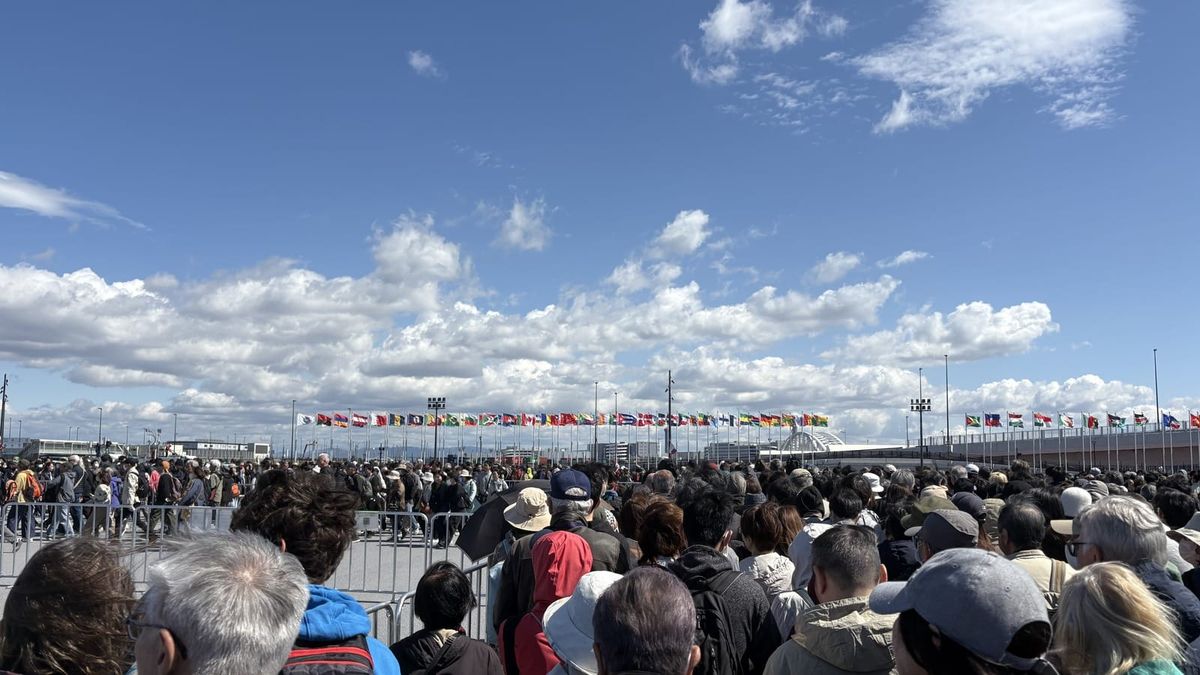
Japan received more than 42 million international tourists in 2025 — a figure that would have been unthinkable a decade ago. In the first three months of 2026 alone, more than 10.6 million visitors passed through. Popular neighbourhoods in Kyoto that once served local residents as ordinary commercial streets have become, functionally, tourist infrastructure. Restaurants that a Kyoto family would have eaten at every week now operate on a pricing model calibrated to European and American wallets. The yen's prolonged weakness has made Japan, for foreign visitors, one of the most affordable luxury destinations on earth. For Japanese residents earning wages that have barely moved in a generation, it has made their own cities progressively less accessible.
in Japan, 2025 — a new record
Visa applications after new rules
requirement — ¥5M to ¥30M
The consequences are visible in ways that rarely make international headlines. Some small restaurants and izakayas — the neighbourhood establishments that were never designed for tourists — have begun posting signs in Japanese only, not as a legal device but as a practical one: a way of managing a service encounter that, without shared language and shared cultural expectations, produces friction and exhaustion for everyone involved. These signs are sometimes reported in Western media as evidence of discrimination. They are better understood as a measure of how far the pressure has built, and how limited the available responses are for a business owner who lacks the resources to hire multilingual staff or redesign their operation for an international clientele they never sought.
Japanese workers in the service industry — many of them part-time, many operating under the social obligation to maintain composure regardless of what is happening in the room — are tired. Not visibly. Japan's culture does not permit visible fatigue in the presence of guests. But it is there, and it shows up in the texture of interactions in a way that anyone who spent time in Japan before the tourism surge can detect. The smile is present. The precision is present. What has quietly diminished is the ease — the sense that this exchange is a natural expression of how things are here, rather than a performance being maintained under increasing cost.
Omotenashi was never a hospitality standard. It was an emergent property of a specific social condition — extreme cultural coherence, high mutual trust, and shared unspoken codes. You cannot maintain that experience in a room where the social contract that produced it no longer applies.
The insight that most foreign commentary misses is this: omotenashi was always a function of homogeneity. Not homogeneity as an ideology, but homogeneity as a social fact. Japan is among the most culturally unified large societies on earth — a country where 97.5% of the population shares not just a language but a dense lattice of behavioural expectations, aesthetic sensibilities, and unspoken social obligations that took centuries to form. In a Japanese service encounter between a Japanese provider and a Japanese customer, an extraordinary amount of communication happens without words. The customer knows what to expect. The provider knows what the customer needs. The interaction operates on a shared operating system that neither party needs to explain or enforce. What the world calls omotenashi is largely what happens when a high-trust, high-coherence society provides service to itself.
Extend that system to serve tens of millions of arrivals who do not share the operating system, some of whom actively misread Japanese politeness as permission to behave in ways that would be unthinkable at home, and the strain is not surprising. It is structural. The Japan that visitors fell in love with was not available in unlimited quantities. It was a finite resource, produced by specific conditions, and those conditions cannot simply be scaled.
Into this context arrives Manish Kumar — and his story deserves to be told without simplification in either direction.
Kumar, an Indian restaurateur who has lived in Japan for nearly thirty years, was informed by Japan's Immigration Services Agency earlier this month that his Business Manager Visa renewal had been denied. He broke down at a protest rally in Tokyo. His children were born in Japan. They speak only Japanese. They have never known another country. He has owned a home. He has run a business for eighteen years. The human weight of this situation is real, and it should be acknowledged plainly: when a system produces this outcome for a man in this position, something has failed — even if what failed was not the new rules themselves but the thirty years of regulatory inattention that allowed the problem to compound to the point where the correction is this severe.
Because Kumar's case does not exist in isolation. It exists within a pattern. Japan's Business Manager Visa — which allows foreign nationals to reside in Japan while operating a business — was for years administered with a leniency that allowed it to function, in practice, as a low-cost immigration pathway. The capital requirement was set at ¥5 million, a sum accessible to almost anyone with modest savings. There was no language requirement. There was no obligation to employ local staff. The result was a category of resident that satisfied the letter of the visa but not its intent: small operations, frequently sole proprietors, employing few or no Japanese workers, serving diaspora communities in diaspora language, contributing economically at the margins while integrating socially not at all. Monthly applications under these conditions ran at approximately 1,700. After Japan revised the requirements — raising the capital threshold sixfold to ¥30 million, mandating the employment of at least one full-time local worker, and requiring demonstrated Japanese language proficiency — applications fell to around 70 per month. That collapse tells you more about the nature of the prior applicant pool than the harshness of the new rules.
Kumar almost certainly did not set out to exploit a loophole. He arrived, built something, put down roots, and trusted that the system he had navigated for three decades would continue to accommodate him. The tragedy of his situation is that the system's belated correction makes no distinction between the bad actors it was designed to address and the legitimate long-term residents caught in the revision. That is a genuine policy failure. It does not, however, change the underlying logic of what Japan is doing — or why.
Japan is not, as some coverage suggests, slamming a door. It is, for the first time, clearly stating what it wants behind the door it is choosing to keep open.
The new architecture is legible. Business Manager Visa applicants must demonstrate N3-level Japanese proficiency — the intermediate standard that allows functional communication in everyday commercial settings. They must employ at least one full-time Japanese worker or permanent resident. They must hold ¥30 million in capital, a level that identifies genuine business investment rather than residential convenience. Permanent residency applicants must now hold the maximum visa duration — typically five years — before applying, closing the pathway of accumulating residence on shorter-term renewals. Tax and social insurance payment histories are scrutinised with a rigour that was previously theoretical. The overall message is consistent: Japan welcomes those who invest in it, contribute to it, speak its language, employ its people, and demonstrate, through the texture of their presence, that they intend to participate in Japanese society rather than merely reside adjacent to it.
For the serious professional — the executive building a regional operation, the investor establishing genuine presence, the entrepreneur with real capital and real intent — none of this is a barrier. It is, if anything, a clarification. Japan has always rewarded those who approach it seriously. What has changed is that the system has stopped extending the same patience to those who do not.
Japan is also not alone in this shift. This month, the Trump administration announced that foreign nationals in the United States who wish to apply for permanent residency will now be required to leave and apply from their home country — reversing more than fifty years of practice that allowed the entire green card process to be completed from within the US. The policy covers students, temporary workers, and even spouses of American citizens. The framing in Washington is about closing loopholes. The structural logic is the same as in Tokyo: permanent residency is being redefined, in both countries simultaneously, from an entitlement accumulated by physical presence to a permission granted for demonstrated value and genuine commitment.
Two countries, entirely different immigration cultures, reaching the same structural conclusion in the same month. This is not coincidence. It is a signal about where the world is moving.
Here is the thing that most of the commentary, in both directions, has failed to say.
The Japanese people who are frustrated by what their country has become for visitors are not being nostalgic. They are not resisting change or retreating from the world. They are describing, with considerable precision, a loss that is real: the slow erosion of the social conditions that made Japan, Japan. The omotenashi that visitors love was not produced by a hospitality industry. It was produced by a civilisation. It was the natural expression of a society in which people looked after each other because they were embedded in a web of mutual obligation and shared expectation so deep that care required no instruction. Mass tourism at scale, and mass immigration without integration, both create the same pressure on that web: they introduce large numbers of people who are not embedded in it, do not understand it, and in some cases actively fray it through behaviour that treats Japan as a consumer experience rather than a community.
The reforms now underway — the stricter visa standards, the dual-pricing at tourist sites, the tougher PR requirements, even the quiet appearance of Japanese-only signs in neighbourhood establishments — are not, from the Japanese perspective, a retreat. They are an attempt at restoration. An effort to preserve enough of the social coherence that produced omotenashi for it to remain something genuine rather than something performed under duress for the benefit of people who will not be there next week.
Whether that effort succeeds is genuinely uncertain. Japan cannot hold back the forces that have already reshaped its major cities. But the attempt itself reflects something important about how Japan understands its own identity — and about the terms on which it is prepared to remain open to the world.
For anyone who wants to do serious business in Japan, or build a genuine long-term presence there, the message is neither welcoming nor unwelcoming. It is something more demanding than either. Japan is prepared to receive you, on the condition that you take it seriously — that you learn enough of its language to function within it, invest enough of yourself in it to contribute to it, and approach it with the understanding that what you admire about this country was built by specific people under specific conditions, and cannot be maintained by those who consume it without ever trying to understand it.
That has always been the implicit bargain. Japan has simply decided to make it explicit.
Bowen is an independent business consultant and cross-cultural strategist. He has lived and worked across Hong Kong, Singapore, Kuala Lumpur, Tokyo, London, Lille and Stockholm. This article is for informational and analytical purposes only and does not constitute financial or investment advice. Nothing in this newsletter should be construed as a recommendation to buy, sell, or hold any asset or security.